
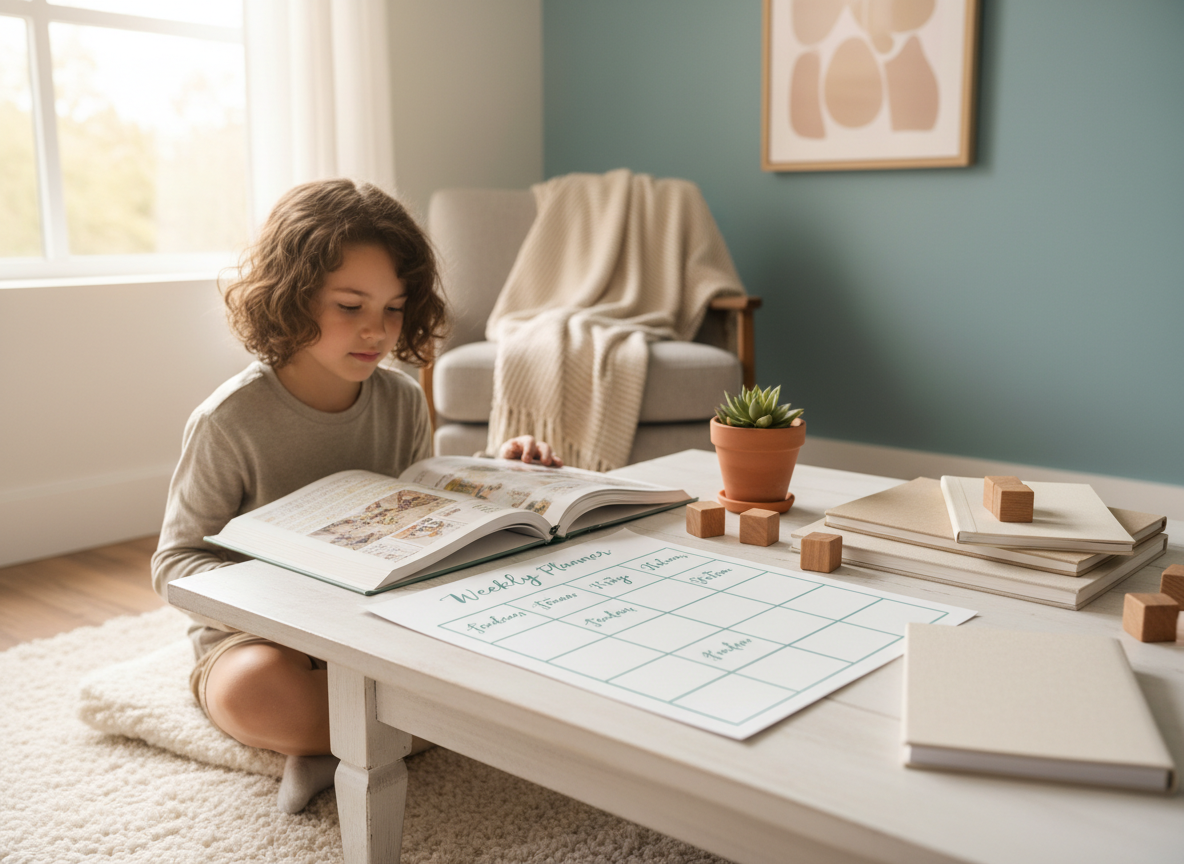
If you're homeschooling and you feel like you're constantly behind, constantly adjusting, and constantly tired — you're not doing it wrong. You're doing something big.
The goal isn't a perfect schedule. The goal is a rhythm — a gentle pattern your family can return to.
A Rhythm (Not a Rigid Schedule)
A rhythm gives you structure without pressure. It's flexible enough for sick days, appointments, travel, and real life — but steady enough that kids know what to expect.
Think of it like a weekly “home base”.
A Simple Weekly Plan
Here's a simple weekly rhythm that works well for many families (especially PK–6th). Adjust the subjects and intensity based on your child's age.
Monday — Core + Planning
- ✓ Math + reading
- ✓ Short writing practice
- ✓ Choose the week's read-aloud
Tuesday — Core + Enrichment
- ✓ Math + reading
- ✓ Science or STEM activity
- ✓ Outdoor time
Wednesday — Skills + Social
- ✓ Math review games
- ✓ Reading + narration
- ✓ Co-op, class, or playdate
Thursday — Core + Creative
- ✓ Math + reading
- ✓ Creative writing or art
- ✓ Music practice
Friday — Catch-Up + Celebration
Fridays are for finishing what's unfinished — and celebrating what you did.
- ✓ Light review (spelling, math facts, reading)
- ✓ Field trip, nature walk, library, or baking
- ✓ “Show what you learned” (1–2 minutes per child)
Two Tiny Habits That Prevent Burnout
1) Keep the “minimum” visible
On hard days, do the minimum: a little math, a little reading, and connection. That's a successful day.
2) Build in a weekly reset
Pick one time each week (Sunday evening or Monday morning) to reset: glance at your week, choose 1–2 priorities, and let the rest be extra.
Want Support With the Rhythm?
If you'd like a steady routine with a teacher your child knows and loves, our live Zoom programs are designed to bring structure, accountability, and encouragement — while keeping learning fun.